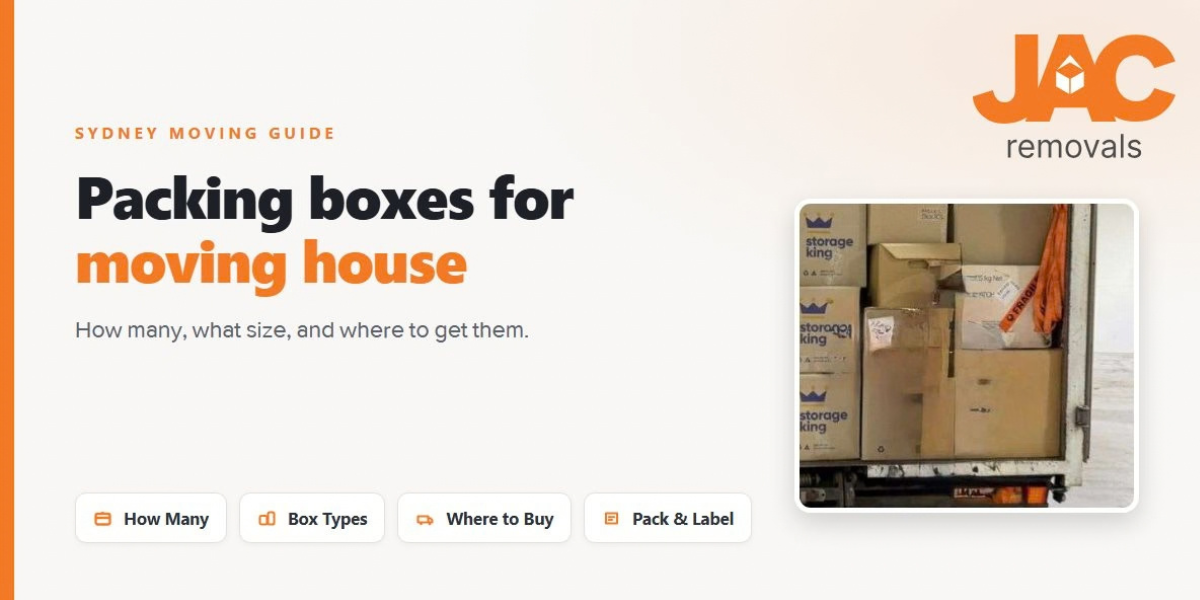
The packing boxes required for moving depend mainly on the size of your home: a one-bedroom flat needs roughly 20 to 30, a two-bedroom home 30 to 50, and a three-bedroom house 60 to 80. But the number is only half the story. The right mix of box sizes, a few good packing habits, and knowing where to get boxes for packing all make moving day run smoothly. This guide covers how many boxes you need, the types to use, where to find them, and how to pack each one so nothing breaks in transit.
How Many Packing Boxes You Need
The quantity of packing boxes required for moving comes down to how much you own, not just how many rooms you have. As a rough guide, a studio or one-bedroom home needs 20 to 30 boxes, a two-bedroom home 30 to 50, a three-bedroom house 60 to 80, and a four-bedroom home or larger can pass 100.
If you have been searching “packing boxes required moving” and hoping for one magic number, this is why there is not one: two homes with the same number of bedrooms can need very different amounts. Two things change the count. The first is clutter: the more you declutter before you pack, the fewer boxes you buy and the less you pay to move. The second is what you own: a big book, kitchen or wardrobe collection lifts the number quickly. When in doubt, get a few extra, as leftover flat cartons are easy to return or reuse, and running out mid-pack is far more stressful than having a spare.
Types Of Packing Boxes
Using the right box for the right item protects your belongings and saves space in the truck.
Everyday Cartons
Most of your move fits in three sizes. Small or book cartons take heavy items like books, tools and pantry tins, so each packing box stays light enough to lift. Medium cartons suit everyday goods such as kitchenware and toys. Large cartons are for light, bulky things like linen, pillows and lampshades. A good rule is heavy items in small boxes and light items in large ones.
Specialty Boxes
Some items need a purpose-made box. Wardrobe or port-a-robe boxes let clothes travel on the hanger. Picture and mirror cartons protect frames and glass, while dish and glass packs have dividers for fragile kitchen items. A sturdy packing box designed for the job is worth it for anything breakable or valuable.
Where To Get Boxes For Packing
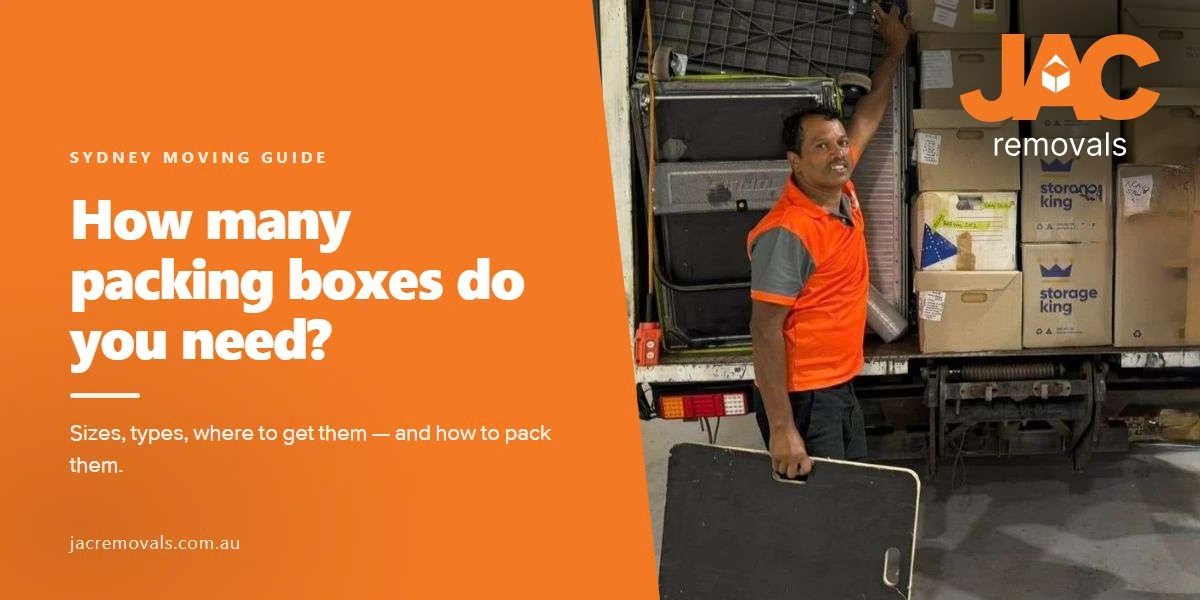
You have three routes. You can buy new boxes from Bunnings, Officeworks, Kmart or a storage company, which gives you clean, uniform cartons that stack well. You can gather free boxes from supermarkets, liquor stores or local buy-nothing groups, though sizes will vary and some may be worn. Or you can order boxes for packing directly from your removalist, who can drop off the right mix and often take back what you do not use.
If you would rather skip the sorting altogether, a packing and unpacking service will bring the cartons and do the packing for you. Many people mix these options, buying strong cartons for fragile rooms and using free boxes for clothes and soft goods.
How To Pack Your Boxes Well
Good packing is about weight, padding and labelling. Keep each box under about 15 to 20 kilograms so it is safe to carry, and fill gaps with paper or towels so nothing shifts. Wrap fragile items individually and stand plates on their edge rather than flat. Pack one room at a time and finish it before moving on.
A Simple Labelling Tip
Write the room and contents on the side of every box, not the top, so you can read it while boxes are stacked. Number your boxes and keep a short list, and mark anything fragile clearly. Set aside one essentials carton with chargers, medication and a few days of basics, and keep it with you on the day.
Frequently Asked Questions
How many boxes do you need to move a house?
As a guide, 20 to 30 for a one-bedroom home, 30 to 50 for two bedrooms, and 60 to 80 for three. Declutter first and you will need fewer.
Does Bunnings offer moving boxes?
Yes, Bunnings, Officeworks and most storage companies sell new moving cartons. Supermarkets and liquor stores are good sources of free ones if you do not mind mixed sizes.
What size boxes are best for packing?
Use small cartons for heavy items and large cartons for light, bulky ones. A mix of small, medium and large plus a few specialty boxes covers most homes.
Can my removalist supply the boxes?
Many can. A removalist Sydney families use will often deliver a box kit before the move and collect the spares afterwards, which saves you a separate trip.
How do I stop boxes from breaking?
Do not overpack, keep each box liftable, pad the gaps, and choose a strong packing box for anything fragile. Tape the base well so the bottom holds.
Final Thoughts
The packing boxes required moving a home well come down to the right number, the right sizes and a little care with how you pack them. Work out your count by home size, mix everyday cartons with a few specialty boxes, and label as you go so unpacking is just as easy.
If you would rather not sort boxes at all, JAC Removals can supply the cartons and handle the packing for you, whether it is a local move across town or an interstate move. As a trusted removalist Sydney locals rely on, JAC Removals will get your boxes and your move sorted from the first carton to the last. contact JAC Removals for an honest quote before the day.
Planning a Move?
Get Your Free Quote Today
Tell us your details and our team will provide a no-obligation estimate within 2 hours.